 Skip to content
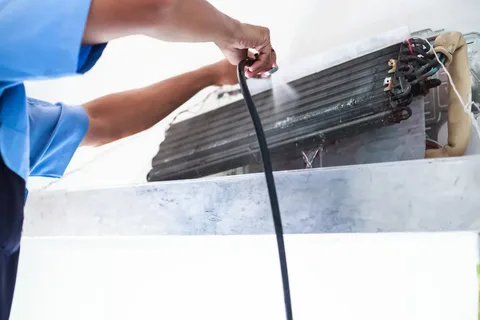
AC coil cleaning is the process of removing dirt, dust, mold, and mineral buildup from an air conditioner’s evaporator and condenser coils so heat transfer and airflow return to their original, factory-rated levels. Every other benefit — lower bills, colder air, a longer equipment lifespan — flows directly from that one mechanical fact. Once the surface of a coil is coated in debris, it stops doing the one job it exists to do: exchange heat.
What a Coil Actually Does
An air conditioner has two coils working as a pair. The evaporator coil, sitting inside the indoor unit, absorbs heat from the air passing over it. The condenser coil, sitting outside, releases that heat into the outdoor environment. Refrigerant cycles between the two, changing state and carrying heat from inside your home to outside. This entire cycle depends on unobstructed airflow across metal fins — which is why duct cleaning and coil cleaning are often scheduled together; a system pulling air through a clogged duct network puts the same kind of strain on a coil that dust does directly.
Why Coils Get Dirty
Coils don’t get dirty from one source — they accumulate debris from several directions at once:
- Airborne dust and pollen pulled through the return air system
- Grease particles, common in kitchens and commercial spaces
- Mold and biofilm, which grow in the condensation that naturally forms on evaporator coils
- Pollen, grass clippings, and cottonwood, which cake onto outdoor condenser fins
- Mineral scale, left behind when hard water evaporates on the coil surface
Each of these creates an insulating layer. A coil doesn’t need to be visibly filthy to lose performance — even a thin film of grime measurably reduces heat transfer.
The Signs Your Coils Need Cleaning
A system rarely announces coil buildup outright; it shows up as a cluster of secondary symptoms:
- Weak or lukewarm airflow from vents
- Rising energy bills without a change in usage
- Longer run times to reach the same temperature
- Ice forming on the indoor coil or refrigerant lines
- Musty odors when the system starts
- Higher indoor humidity despite the AC running
If you’re also noticing airflow problems tied to your furnace fan rather than the coil itself, it’s worth having the blower and heat exchanger inspected at the same visit, since both components sit in the same airstream.
Why Dirty Coils Cost More Than They Save
A blocked coil forces the compressor to run harder and longer to hit the same thermostat setting. That extra runtime translates directly into higher electricity consumption. Left unaddressed, the added strain shortens compressor life, increases the odds of a mid-summer breakdown, and can lead to frozen coils that cause even further damage. Routine coil cleaning is a maintenance cost that prevents a much larger repair cost later.
How Professional AC Coil Cleaning Works
Unlike surface dusting, professional coil cleaning is built around the coil’s fin structure, which is delicate and easily bent by improper tools. A proper service typically includes:
- Inspection of both evaporator and condenser coils to assess buildup type and severity
- Fin-safe cleaning, using low-pressure or custom-built washing equipment matched to the coil’s spacing
- Debris and scale removal, without relying on harsh chemicals that can corrode aluminum fins over time
- Drain line and pan check, since evaporator coils sit above a condensate system that clogs just as easily
- Airflow verification, confirming the system is pulling air at the rate it was designed for
Homes with humidifiers attached to their HVAC systems benefit from bundling this with routine humidifier maintenance, since both components interact with the same airflow and moisture cycle.
How Often Coils Should Be Cleaned
Most HVAC professionals recommend cleaning coils at least once a year, ideally before the cooling season begins. Homes near construction, agricultural land, or heavy tree cover — and commercial kitchens or facilities with high particulate loads — often need it more frequently. For businesses, this is usually paired with a broader commercial duct cleaning schedule to keep the entire air-handling system, not just the coils, working at spec.
Coil Cleaning and Indoor Air Quality
Because evaporator coils sit directly in the airstream that circulates through your home, whatever grows or collects on them gets distributed with every cooling cycle. Removing mold, biofilm, and dust from the coil surface reduces one of the more overlooked contributors to poor indoor air quality — a benefit that compounds well with HRV/ERV cleaning for homes running mechanical ventilation alongside central air.
The Bottom Line
A coil is a heat exchanger first and foremost — its entire value depends on a clean, unobstructed surface. Keeping that surface clear isn’t cosmetic maintenance; it’s the single factor that determines whether your air conditioner runs efficiently, quietly, and for its full expected lifespan. Pure Fresh Canada provides professional AC evaporator and condenser coil cleaning across Edmonton, Sherwood Park, and St. Albert — book a service before the next cooling season starts.
