 Skip to content
Edmonton’s climate creates one of the most demanding environments for indoor humidity control in Canada. Between late October and early April, outdoor air holds very little moisture, and once that cold air is drawn into a home and heated by a furnace, its relative humidity drops even further. The result is the dry, static-charged indoor air that Edmonton homeowners experience every winter — cracked skin, irritated sinuses, shrinking hardwood floors, and furniture joints that loosen as wood contracts. A whole-house humidifier addresses this problem at the source, but the system only works as well as it is maintained. Humidifier system maintenance in Edmonton is not an optional add-on; it is the difference between a unit that genuinely improves indoor air quality and one that quietly becomes a source of mold, mineral scale, and bacterial growth.
Why Edmonton’s Climate Makes Humidifier Maintenance Non-Negotiable
Prairie winters are defined by extended stretches of sub-zero temperatures and low ambient humidity, often falling below 30 percent relative humidity indoors without mechanical assistance. Forced-air furnace systems, which dominate residential heating across Edmonton, Sherwood Park, and St. Albert, compound the issue because heating dry air lowers its relative humidity even further before it circulates through the home. A furnace-integrated humidifier — whether a bypass, fan-powered, or steam unit — is engineered to reintroduce moisture into that airstream, but the components responsible for doing so (the water panel, the solenoid valve, the drain line, and the humidistat) are exposed to hard water minerals and standing moisture for months at a time. Without regular servicing, these components scale over, clog, or become breeding grounds for microbial growth, which defeats the entire purpose of the system.
What Happens Inside an Unmaintained Humidifier
Alberta’s water supply carries a moderate-to-high mineral content, and as water evaporates off the humidifier pad, dissolved minerals such as calcium and magnesium are left behind. Over a single heating season, this buildup can coat the water panel in a hard, chalky layer that blocks airflow and prevents proper evaporation. A scaled-over pad forces the system to work harder while producing less actual humidity, so homeowners often notice their static shocks and dry skin symptoms returning even though the humidifier appears to be running normally.
The bigger concern is biological. Humidifier components sit in a warm, damp environment for extended periods, which is exactly the condition mold spores and bacteria need to establish themselves. Once contamination sets in, the system’s airflow can carry those particles directly into the home’s living space, undermining indoor air quality rather than improving it. This is precisely why professional humidifier system maintenance treats the water panel, drain assembly, and housing as items requiring inspection at defined intervals, not components to be ignored until they visibly fail.
What Professional Humidifier System Maintenance Actually Involves
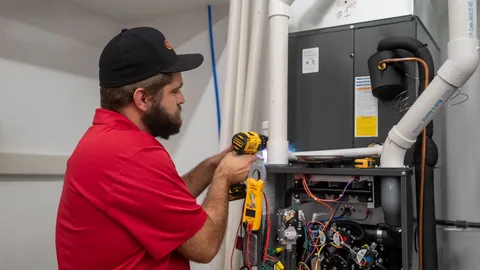
A thorough maintenance visit goes beyond wiping down the exterior housing. Technicians typically remove and inspect the water panel or evaporator pad for mineral scale and microbial growth, flush the water supply line to clear sediment, check the solenoid valve for proper operation, and test the drain to confirm it isn’t backing up or leaking into the furnace cabinet. The humidistat — the control that regulates target humidity based on outdoor temperature — is also checked for calibration, since an inaccurate reading can cause a home to be over-humidified, leading to condensation on windows and, over time, moisture damage to window frames and sills.
Airflow through the bypass duct or fan assembly is inspected as well, since restricted airflow reduces the humidifier’s ability to distribute moisture evenly across the home. For fan-powered units, the fan motor and blade assembly are checked for dust buildup and wear. Where the water panel has degraded beyond cleaning, replacement is usually more cost-effective than attempting to restore a heavily scaled pad. A complete service typically takes one to two hours, depending on the humidifier type, its accessibility within the furnace system, and how much buildup has accumulated since the last inspection.

How Often Should a Humidifier Be Serviced
Most manufacturers and HVAC professionals recommend annual maintenance, scheduled shortly before the heating season begins in early fall. Servicing the unit before Edmonton’s first hard freeze ensures the humidifier is ready to run efficiently through the months when it will be used continuously, rather than discovering scale buildup or a failed solenoid valve in the middle of January. Households with harder water, larger square footage, or humidifiers that run for longer stretches each day may benefit from a mid-season check as well, particularly if visible mineral deposits appear on the water panel or if indoor humidity readings drop despite the system running.
Signs an Edmonton Home’s Humidifier Needs Attention
Several warning signs indicate that a humidifier system is due for service rather than simply running as intended. Persistent dry air despite the system operating is one of the clearest indicators, since it usually points to a scaled or clogged water panel restricting evaporation. Unusual musty or sour odors coming from the furnace room can signal microbial growth inside the humidifier housing or drain line. Visible water leaks around the unit, whitish mineral crust on the water panel, or a humidistat that no longer seems to track actual indoor humidity are all reasons to schedule an inspection rather than wait for a full system failure.
The Indoor Air Quality and Health Connection
Maintaining correct indoor humidity, generally in the 30 to 50 percent range recommended by health authorities, does more than prevent static shocks. Adequate humidity reduces irritation to the respiratory tract, eases symptoms associated with asthma and seasonal allergies, and helps skin retain moisture through Edmonton’s driest months. However, this benefit only holds if the humidifier itself is clean. A neglected unit can reverse the intended health benefit entirely, dispersing mold spores, bacteria, and mineral particulate into the same airstream meant to bring relief. This is the core reason professional maintenance is paired with, rather than replaced by, simple filter changes — a full inspection catches contamination sources that a filter swap alone would miss.
Protecting the Rest of the Home
Beyond respiratory comfort, correct humidity levels protect a home’s physical structure and furnishings. Hardwood flooring, wood trim, and furniture joinery are all sensitive to moisture swings; wood that dries out too much in winter can crack, cup, or separate at the seams, while wood exposed to excess humidity from an over-calibrated humidifier can swell and warp. A properly maintained and correctly calibrated humidifier keeps a home’s humidity within the narrow band that protects both occupant comfort and the building materials themselves, which is particularly relevant in Edmonton homes with engineered hardwood or older wood flooring that has already experienced several heating seasons of moisture stress.
Service Areas Across the Edmonton Region
Pure Fresh Canada provides humidifier system maintenance and installation throughout Edmonton and the surrounding communities, including Sherwood Park, St. Albert, Beaumont, Leduc, Devon, Fort Saskatchewan, Spruce Grove, Stony Plain, Ardrossan, Morinville, and Namao. Because furnace configurations, water hardness, and home age vary across these communities, a technician familiar with the regional housing stock is better positioned to recommend the right maintenance interval and to flag issues specific to a given system, whether that’s an older bypass humidifier in a St. Albert bungalow or a newer fan-powered unit in a Spruce Grove build.
Booking Maintenance Before the Heating Season
The most effective approach to humidifier system maintenance in Edmonton is proactive rather than reactive: scheduling service before the furnace runs continuously for the winter, rather than after symptoms like dry skin, static shocks, or musty odors have already appeared. A pre-season inspection catches mineral buildup, worn components, and calibration drift while they’re still minor and inexpensive to correct, keeping the system running efficiently and the home’s indoor air genuinely healthier through the coldest months of the year.
